

Nature in Motion

Tuesday, 19 May 2026
Doors open
7:00 pm
Event starts
7:30 pm
Stammen Cafe & Bar
Kongens gate 55, 7012 Trondheim, Norway
What do pollen forecasts, disappearing seabird cliffs, glowing deep sea worms, and cross country skis have in common? Science!
Join us for Night 1 of Pint of Science Trondheim 2026, where four researchers take you behind the scenes of science you encounter every day (and some you probably don’t). Expect short, lively talks, striking visuals, and plenty of time for questions and informal conversation. No prior science knowledge needed – just curiosity, good company, and maybe a drink in hand.

Nestor Gonzalez Roldan
NTNU
Behind the Pollen Forecast: What’s in the Air and Why It Makes Us Sneeze
Pollen affects millions every year, but what’s actually in the air we breathe? In this talk, I’ll explain how we monitor and forecast pollen in Norway, what makes some pollen more allergenic than others, and why environmental conditions can change how strongly our bodies react. Join me to discover the science behind pollen warnings, and how they help protect public health.
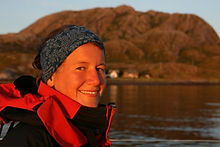
Signe Christensen-Dalsgaard
NINA (Norwegian Institute for Nature Research)
Silent bird cliffs – a photographic journey through shifting baselines
In the 1970s over a million kittiwakes bred on the coast of mainland Norway; today fewer than 50,000 pairs remain. Many colonies have vanished; the bird cliffs are silent. It is almost impossible to comprehend the extent of the changes. The decline reflects “shifting baselines,” where each generation accepts a more degraded nature as normal. We used photos from 1980 and 2024 taken from the same viewpoints, to create a visual story of the dramatic changes in seabird abundances.

Nadia van Eekelen
NTNU
How do deep-sea animals use light to communicate?
In the deep ocean, where sunlight has been absorbed, the only source of light is produced by marine organisms themselves. This is called bioluminescence, and it is used for communication. The colours of bioluminescence vary and may reflect different functions. To explore how colour shapes different communication strategies, I’m investigating two marine annelid species with different bioluminescent colours: Tomopteris helgolandica emitting yellow light, and T. planktonis emitting blue light.

Johana Fialová
NTNU
Science hidden under a cross-country ski
Cross-country skiing still holds many secrets! Why is snow slippery? How does friction vary along the ski? I am part of FramSki, an NTNU interdisciplinary project developing fast, fluorine-free skis with the collaboration of top athletes and industry. Using indoor laboratory measurements, we can uncover the hidden physics of skiing.