

Brains, Bites & Bots

onsdag 20. mai 2026
Doors open
7:00 p.m.
Event starts
7:30 p.m.
Stammen Cafe & Bar
Kongens gate 55, 7012 Trondheim, Norway
What connects food waste, youth behaviour, and the technology running quietly in the background of everyday life? Science!
Join us for Night 2 of Pint of Science Trondheim 2026, where three researchers unpack how scientific thinking helps us design better food systems, understand human behaviour, and make sense of the invisible technologies shaping our daily routines. Expect short, engaging talks, real world examples, and plenty of room for discussion. No prior science knowledge needed; just curiosity, good company, and maybe a drink in hand.
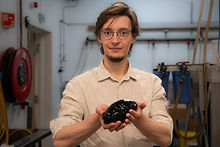
Andreas Langdal
NTNU/UiT
Must new food be ultra processed? Developing side-streams from food systems with green processing and sustainability mapping.
Food is a major part of culture, employment and health! But, in parallel, it is found to be an equally large part of global pollution, non-communicable diseases and inequalities. Using green processing and sustainability mapping in collaborate with food-system actors and consumers, we evaluate how side-streams of potatoes, oilseeds and pelagic fish value chains can further develop. Aiming to make more food from the same fields and the same fish stocks.

Janelle Shari Weir
When Harmful Behaviour Makes Sense: How the Brain's Survival Models Shape Youth Behaviour
What if behaviors we label as 'risk' are actually the brain's best survival strategy? The brain constantly builds predictions about safety, belonging, and opportunity. For young people growing up in unstable environments, behaviors like aggression, substance use, or criminal involvment can emerge from survival-based internal models of the world. This talk explores how neuroscience can help us understand youth risk behavior differently and design service responses that support adaptive capacity.
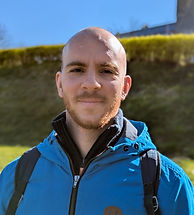
Josip Kir Hromatko
University of Zagreb, Croatia
Feedback loop - Control systems in everyday life
Although they are usually invisible, control systems are everywhere around us. From our thermostats and washing machines, to the ships and planes we use for transport, feedback loops help us automate decisions. In this talk, I will present the basics of the "think" part in the "sense-think-act" loop, making such automation possible. Through several examples from both current research and our daily lives, I hope to provide a better understanding of the amazing technology we regularly use.